


What Are Sound Waves and How They Matter in Acoustics
Sound waves are mechanical disturbances that transfer sound energy through air, water, solids, and other elastic materials. In air, they travel mainly as longitudinal waves formed by alternating regions of compression and rarefaction. Their frequency, amplitude, wavelength, phase, and speed determine how sound behaves and how people perceive it.
For acousticians, these sound wave properties explain practical problems such as speech clarity, reverberation, low-frequency build-up, sound transmission through walls, and structure-borne vibration.
Understanding sound waves provides the foundation for effective soundproofing, room acoustic treatment, vibration control, and accurate sound measurement.
Key Takeaways
- Sound waves require a physical medium. They travel by transferring mechanical energy between neighbouring particles.
- Frequency defines the rate of vibration. It strongly influences perceived pitch and determines wavelength at a given speed of sound.
- Amplitude relates to pressure variation and sound intensity. Greater acoustic pressure usually creates a stronger auditory sensation.
- Long wavelengths behave differently from short wavelengths. Low-frequency sound interacts strongly with room dimensions and building structures.
- Surfaces change wave behaviour. Sound wave reflection, absorption, diffusion, and sound transmission occur whenever sound reaches a boundary.
- Rooms create acoustic resonance and standing waves. Dimensions and surface properties determine which frequencies receive reinforcement or attenuation.
- Professional acoustic design works from wave behaviour. Measurements identify frequency-dependent problems and guide the selection of absorption, isolation, mass, damping, and diffusion.
What Are Sound Waves?
A sound source begins with vibration. Vocal cords move during speech. A loudspeaker cone moves forwards and backwards. A guitar string oscillates after being plucked. Machinery, pumps, fans, floors, walls, and pipes can also become sound sources when mechanical forces make them vibrate.
These sound vibrations disturb the particles around the source. In air, the moving source compresses nearby molecules and then allows them to spread apart. The disturbance passes from one group of particles to the next.
The particles oscillate around their local equilibrium position while the wave carries energy away from the source. This distinction matters. Sound propagation transfers energy through the medium while each particle performs a comparatively small local movement.
NASA describes sound in air through alternating compression and rarefaction regions generated by rhythmic pressure changes. This mechanism creates the pressure variations recognised by microphones and the human auditory system.
Sound therefore requires a medium with mechanical properties that support wave propagation. Air, water, steel, concrete, timber, plasterboard, and glass all transmit acoustic waves differently because their density, stiffness, damping, and internal structure differ.
A vacuum contains no material particles to transfer the mechanical disturbance. Sound propagation therefore requires solid, liquid, or gaseous matter.
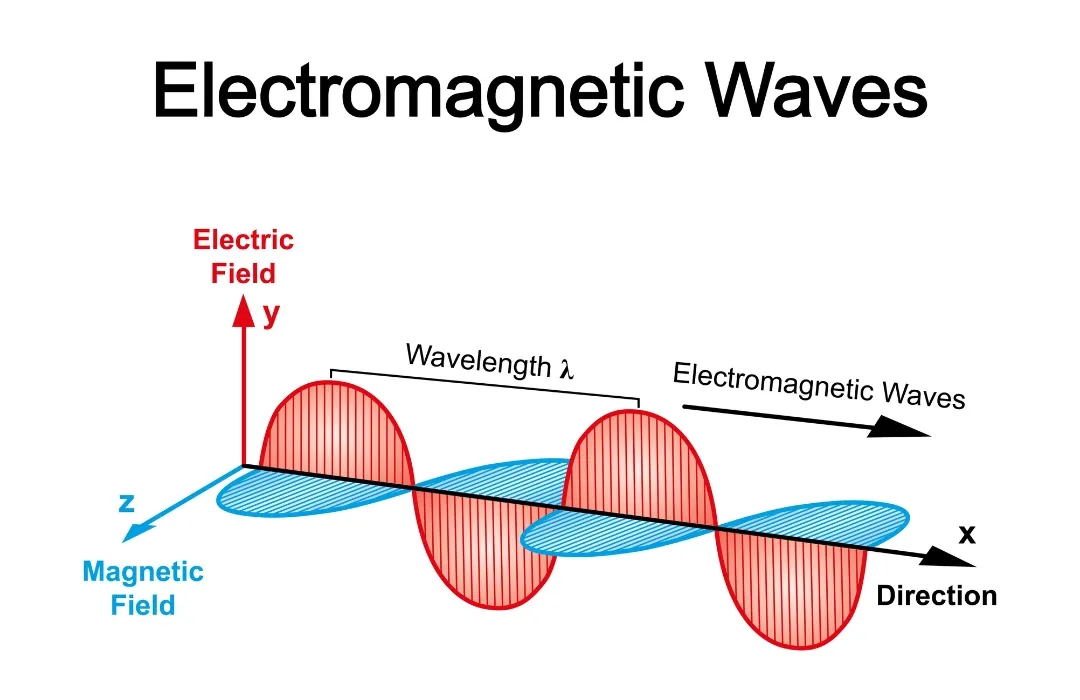
How Sound Waves Travel
Sound in air behaves primarily as a longitudinal wave. The particles move backwards and forwards in approximately the same direction as the travelling pressure disturbance.
A compression contains temporarily increased particle density and pressure. A rarefaction contains reduced density and pressure. Repeating these regions produces the travelling wave.
This behaviour differs from transverse waves, where particle motion occurs perpendicular to the direction of travel. Vibrations in strings can show transverse behaviour, while airborne audible sound reaching a listener behaves predominantly longitudinally.
The same basic principle applies in liquids. Solids support more complex elastic wave behaviour because they can transmit compressional and shear motion.
This distinction becomes important in buildings. Airborne noise can excite a wall, floor, window, or ceiling. The building element then vibrates and transfers energy through the structure. The receiving surface radiates part of that vibration back into the air as sound.
An acoustician therefore follows the complete path:
Source → medium → structure or room → receiver
Effective noise control targets the weakest or most energetic section of this path.
Frequency and Sound Waves
Sound frequency describes the number of complete pressure cycles occurring each second. The unit is hertz, written Hz. A 100 Hz tone completes 100 cycles per second. A 1,000 Hz tone completes 1,000 cycles per second.
Frequency strongly influences perceived pitch. Lower frequencies generally create lower-pitched auditory perception, while higher frequencies create higher-pitched perception.
The approximate human hearing range extends from 20 Hz to 20,000 Hz under favourable conditions, although upper-frequency sensitivity commonly decreases with age. Frequencies below the conventional hearing range fall into infrasound. Frequencies above approximately 20 kHz fall into ultrasound.
The frequency range matters considerably in acoustics because materials and constructions perform differently across the spectrum.
Low-frequency energy from subwoofers, industrial machinery, building services, traffic, and music can excite large structural elements. Higher-frequency speech and equipment noise generally have shorter wavelengths and interact more readily with relatively thin absorptive materials.
Frequency analysis therefore gives far more diagnostic information than a single overall decibel value.

Amplitude, Sound Pressure, and Loudness
Amplitude describes the magnitude of a wave's variation around its equilibrium state. In acoustics, engineers commonly work with acoustic pressure rather than the visual height of a drawn waveform.
Sound pressure level expresses acoustic pressure on a logarithmic decibel scale. The standard reference pressure in air is 20 micropascals.
Greater pressure variation generally corresponds with greater sound intensity and increased perceived loudness. The relationship between physical level and sound perception remains complex because the human auditory system responds differently across frequency, level, duration, and spectral content.
This field belongs partly to psychoacoustics, which studies relationships between measurable acoustic stimuli and auditory perception.
Two sounds with the same measured sound pressure level can produce different sound quality and perceived prominence when their frequency content, duration, modulation, or tonal character differs.
This distinction becomes especially important when assessing pumps, compressors, transformers, ventilation systems, industrial machinery, and low-frequency environmental noise.
Wavelength Explained
Wavelength describes the physical distance occupied by one complete wave cycle.
The relationship is:
Wavelength = speed of sound ÷ frequency
At approximately 20°C, the speed of sound in air is about 344 metres per second according to the UK National Physical Laboratory.
This gives useful practical examples:
- At 100 Hz, wavelength is approximately 3.44 metres.
- At 1,000 Hz, wavelength is approximately 0.344 metres.
- At 10,000 Hz, wavelength is approximately 34 millimetres.
These values explain many acoustic design challenges.
A 100 Hz wave can have dimensions comparable with an entire room. Thin decorative foam therefore has limited influence on such a long wavelength. Low-frequency control usually requires substantial absorber depth, tuned systems, carefully positioned bass traps, structural isolation, or changes to room geometry.
Higher frequencies have shorter wavelengths and interact effectively with comparatively shallow porous absorbers.
Wavelength also influences diffraction around obstacles, interference between multiple sound sources, room-mode behaviour, and microphone positioning.
Speed of Sound in Different Materials
The speed of sound depends on the mechanical properties of the medium.
Air at around 20°C supports sound propagation at approximately 344 m/s. Temperature changes this value. Sound generally travels much faster through water and many solids because their stiffness supports faster mechanical energy transfer.
This behaviour has major consequences for building acoustics.
A vibration introduced into a concrete slab or steel member can propagate through the structure and reappear as sound at a distant location. Structure-borne noise therefore requires vibration isolation as close to the source as practical.
Typical examples include:
- Pumps connected rigidly to pipework;
- Rooftop plant connected to structural steel;
- Lift machinery transmitting vibration into walls;
- Footsteps exciting a floor slab;
- Speakers transferring bass into furniture or partitions;
- Mechanical equipment mounted directly on concrete.
Vibroisolation interrupts this mechanical path through resilient mounts, springs, elastomers, floating floors, resilient hangers, or flexible connectors.
Reflection, Absorption, Transmission, and Refraction
When sound reaches a boundary, its energy can follow several paths.
Reflection
Sound wave reflection occurs when part of the incident energy returns into the original space. Hard, dense surfaces such as concrete, glass, stone, and plaster commonly create strong reflections across much of the audible range.
Reflections influence speech intelligibility, musical clarity, reverberation, flutter echo, and sound localisation.
Absorption
Absorptive materials convert part of the acoustic energy into very small amounts of heat through friction and internal movement.
Porous absorbers such as mineral wool work effectively when air movement occurs inside their structure. Thickness, density, placement, air gaps, and frequency determine their performance.
Transmission
Sound transmission occurs when acoustic energy excites a separating element and produces sound on the opposite side.
Soundproofing systems control this process through mass, resilient separation, damping, airtightness, cavity absorption, and careful junction design.
Refraction
Sound wave refraction describes a change in propagation direction caused by variations in wave speed. Temperature gradients and atmospheric conditions can bend outdoor sound paths.
Refraction has particular relevance in environmental acoustics and long-distance noise prediction.
Attenuation
Sound wave attenuation describes the reduction in acoustic level as sound travels. Geometric spreading, atmospheric absorption, barriers, material damping, and structural losses can all contribute.
Each mechanism requires a different treatment strategy.

Resonance and Standing Waves
Acoustic resonance occurs when a sound source excites a system near one of its natural frequencies. The resulting vibration can become substantially stronger at that frequency.
Rooms have resonances called room modes. Walls, floors, ceilings, panels, ducts, machinery, and structural members also have natural frequencies.
Standing waves form when incident and reflected waves interact in a stable spatial pattern. Certain positions develop stronger sound pressure, while others experience lower levels. This explains a common small-room problem: bass can sound powerful beside one wall and much weaker a short distance away. Moving the loudspeaker, listener, or measurement microphone can therefore change the measured low-frequency response substantially.
Professional room-acoustic work uses room dimensions, frequency response, decay measurements, listening positions, source positions, and absorption placement to control modal behaviour.
Sound Waves in Rooms and Buildings
An enclosed room contains thousands of reflections after a sound source starts.
Early reflections arrive shortly after the direct sound and affect clarity, localisation, and spatial impression. Later reflections combine into reverberation.
Reverberation time describes how sound decays after the source stops. BS EN ISO 3382 provides measurement methods for room acoustic parameters, including reverberation time for different room types. Long reverberation can reduce speech intelligibility in offices, classrooms, restaurants, meeting rooms, and public spaces. Very short reverberation can create an acoustically dry environment where music and natural spatial cues lose support.
Flutter echo develops when sound repeatedly reflects between suitable parallel surfaces. It often creates a rapid, metallic or repetitive character.
Room shape and surface distribution therefore matter alongside total absorption. An effective acoustic environment depends on the relationship between:
- Room volume;
- Surface absorption;
- Reflection geometry;
- Diffusion;
- Source location;
- Listener location;
- Background noise;
- Frequency-dependent decay.
DECIBEL acoustic treatment systems use these principles to control reverberation, reflections, speech clarity, privacy, and overall sound quality.
How Sound Waves Are Measured
Professional sound measurement converts pressure variation into electrical data through a calibrated microphone. A sound level meter can measure overall sound pressure level, while frequency analysers divide the signal into octave, one-third-octave, or narrower frequency bands.
UK Health and Safety Executive guidance references instruments conforming to BS EN 61672-1 for sound-level measurement.
Acousticians may examine:
- Equivalent continuous sound level;
- Maximum and minimum levels;
- Peak sound pressure;
- Octave or one-third-octave spectra;
- Reverberation time;
- Frequency response;
- Impulse response;
- Vibration velocity or acceleration;
- Airborne and impact sound insulation.
Measurement position matters. Distance from sound sources, reflections, room boundaries, microphone height, background conditions, and calibration can all affect results.
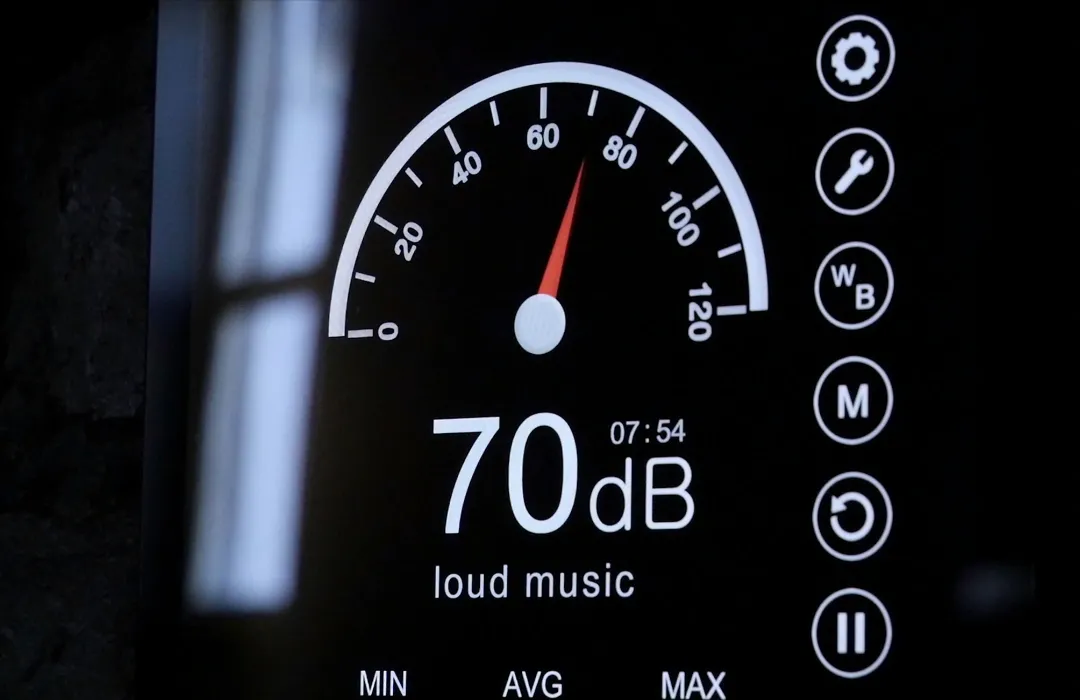
Phone applications can help identify obvious changes or dominant frequencies. Compliance assessment and technical diagnosis require calibrated instruments, controlled procedures, and correct interpretation.
Everyday Examples of Sound Waves
Sound wave theory appears in ordinary environments continuously:
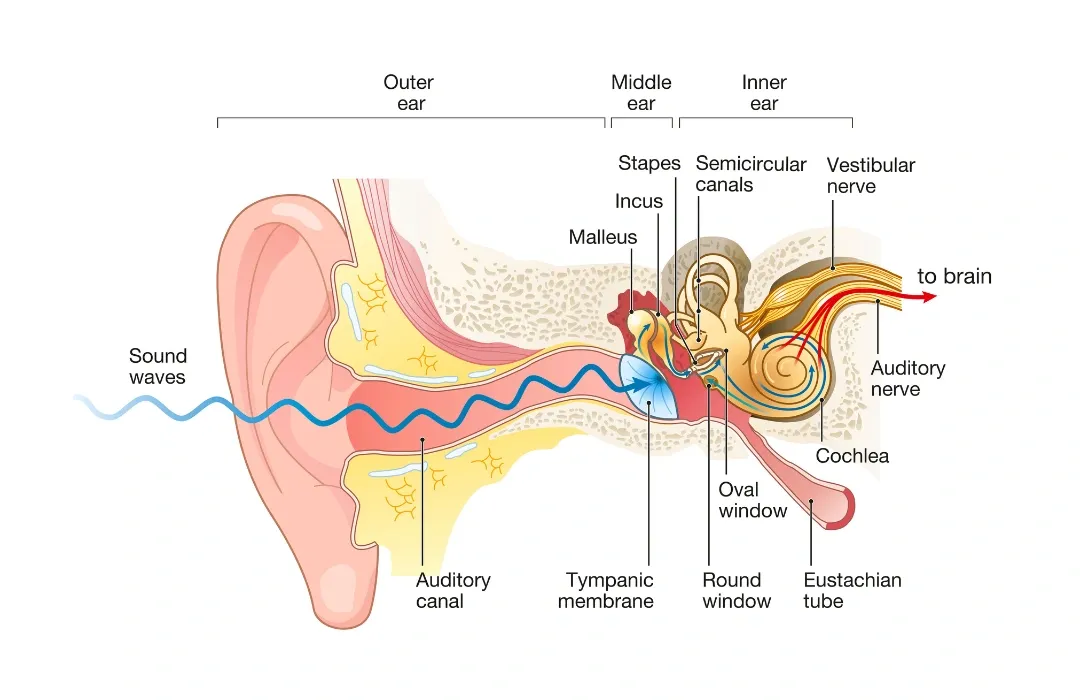
- Speech begins with vocal cords and the vocal tract, travels through air, reaches the ear, and creates eardrum vibration. The auditory system converts the mechanical signal into neural information.
- Music combines many frequencies, amplitudes, phases, and transient events. Room reflections change tonal balance, clarity, and spatial impression.
- Road traffic produces engine, tyre, aerodynamic, and structural noise across a wide frequency range.
- Footsteps create impact excitation in floors and can produce airborne and structure-borne components in adjacent spaces.
- Building services generate sound through fans, pumps, airflow, water movement, motors, compressors, and vibration.
- Ultrasound imaging uses frequencies above the normal hearing range to create diagnostic information from reflected acoustic energy.
- Underwater sonar uses transmitted sound and timing reflections for sonar detection and distance estimation. Marine animals also use echolocation for navigation and prey detection.
- Ultrasonic cleaning uses high-frequency acoustic energy within liquid to assist removal of contamination from surfaces.
These applications demonstrate the same fundamental sound wave characteristics across very different environments.
When Sound Wave Knowledge Becomes Important
Basic sound wave knowledge becomes particularly useful during three stages.
Diagnosing a Noise Problem
A low-frequency hum requires a different investigation from high-frequency speech transmission. A vibration felt through a floor points towards a mechanical path. A long decay after a hand clap points towards excessive room reverberation.
Designing an Acoustic Space
Meeting rooms need controlled reverberation and speech privacy. Recording studios need controlled reflections and low-frequency response. Restaurants need a balanced acoustic environment that supports conversation without excessive build-up.
Specifying Soundproofing
Effective soundproofing depends on frequency, mass, stiffness, cavity depth, resilient connections, flanking paths, penetrations, and workmanship.
This is where acoustic theory becomes practical engineering. Sound wave properties guide material selection, system thickness, isolation details, measurement methods, and performance expectations.
Frequently Asked Questions
What exactly is a sound wave?
A sound wave is a mechanical disturbance that transfers energy through a solid, liquid, or gas. In air, it travels mainly through alternating compressions and rarefactions created by a vibrating source.
How do frequency and wavelength relate?
Frequency and wavelength have an inverse relationship when the wave speed remains constant. Higher sound frequency creates a shorter wavelength, while lower frequency creates a longer wavelength.
What does amplitude mean in acoustics?
Amplitude describes the magnitude of a wave's variation. In practical acoustics, sound pressure provides the main measurable quantity, while sound pressure level expresses that pressure logarithmically in decibels.
Why do reflections and absorption affect room acoustics?
Reflections keep acoustic energy moving around a room after the direct sound arrives. Absorptive surfaces reduce selected reflections and decay time, improving control over reverberation, speech clarity, and tonal balance.
How do standing waves create boomy areas?
Standing waves form through interaction between incident and reflected sound. At specific room frequencies, some locations develop strong pressure maxima while other locations develop weaker regions, creating uneven bass response.
What is the difference between airborne and structure-borne sound?
Airborne sound travels through air before exciting the receiver or building element. Structure-borne sound enters a solid construction through vibration and can travel through floors, walls, beams, pipes, and other connected elements.
How does temperature affect the speed of sound?
Temperature changes the speed of sound in air. At around 20°C, the UK National Physical Laboratory gives a value of approximately 344 m/s, with the precise value changing according to environmental conditions.
When should I ask an acoustician to investigate sound?
Professional assessment becomes valuable when noise crosses between rooms or properties, low-frequency problems persist, speech clarity remains poor, vibration travels through the structure, or a project requires measurable acoustic performance. An acoustician can identify the controlling frequencies and transmission paths before specifying treatment.
Sources and Technical References
- National Physical Laboratory (NPL), Sound Pressure Level and Intensity Level
Covers sound pressure, sound intensity, the 20 µPa reference pressure, acoustic impedance, and the speed of sound in air at 20°C.
https://resource.npl.co.uk/acoustics/techguides/concepts/spl.html - National Centre for Biotechnology Information, How We Hear: The Perception and Neural Coding of Sound
Provides technical background on human auditory perception, frequency sensitivity, pitch, and the approximate 20 Hz to 20,000 Hz human hearing range.
https://pmc.ncbi.nlm.nih.gov/articles/PMC5819010/ - National Physical Laboratory, Decibel Scale
Explains the logarithmic decibel scale, acoustic intensity, sound pressure level, and the relationship between acoustic pressure and intensity.
https://resource.npl.co.uk/acoustics/techguides/concepts/dbscale.html - National Centre for Biotechnology Information, Information About Hearing, Communication, and Understanding
Provides supporting information on frequency, pitch, hearing range, sound propagation, and the influence of temperature and medium on the speed of sound.
https://www.ncbi.nlm.nih.gov/books/NBK20366/